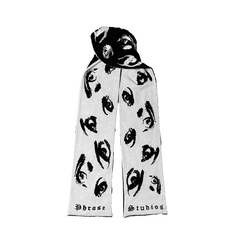
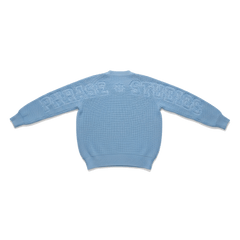
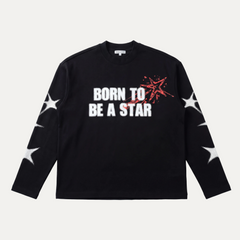
Y2K streetwear is the look of the late 1990s and early 2000s: velour and nylon tracksuits, baggy or low-rise denim, trucker caps, baby tees, tinted sunglasses and logos worn loud rather than quiet. It came back through people who saw it first on phone screens rather than in shops, and it now sits alongside gorpcore, blokecore and opium as a named aesthetic. Phrase Studios sits on the other side of that split, and we come back to it further down.
The revival is not a reproduction. Most of what gets worn now borrows the silhouette and the attitude while leaving the fabrics behind, which is why a 2026 Y2K outfit photographs like 2003 and feels nothing like it.
What Y2K streetwear actually is
Two lanes ran in parallel and merged. One was American hip-hop dress, where artist-owned labels pushed oversized denim, throwback jerseys, velour sets and enormous logos into the mainstream. The other was a Californian celebrity look, photographed constantly by the tabloids of the day: low-rise jeans, a cropped tee, a trucker cap, a small handbag. Japanese labels fed both, supplying the camo and the denim detail that American brands then scaled up.
What ties it together is confidence about branding: monograms, arch logos across the chest, rhinestones spelling a name down the back of a tracksuit. That is the part the revival kept, and the part that makes the look readable from across a room. Our guide to streetwear aesthetics covers the wider map.
The brands of the era
Some still trade, some are trading again, and some are remembered more than worn.
- Juicy Couture: the Los Angeles label whose velour tracksuit became the most recognisable garment of the period, usually pastel, usually logoed.
- Von Dutch: named after Kenny Howard, the Californian pinstriper and custom-car painter, and the label that turned the trucker cap into a fashion item.
- Ed Hardy: built by Christian Audigier around the tattoo flash of the artist Don Ed Hardy, printed large.
- Evisu: the Japanese denim label known for the painted arc across the back pockets, which made a jean identifiable from behind.
- BAPE: founded in Tokyo by Nigo, and the source of the camo, the ape head and the shark hood.
- Baby Phat: led by Kimora Lee Simmons, and known for cropped cuts, its cat logo and heavy embellishment.
- Rocawear: founded alongside Roc-A-Fella by Jay-Z and Damon Dash, a music label extending straight into clothing.
- Sean John: founded by Sean Combs, and the brand that pushed hip-hop dress towards tailoring and a dressier evening register.
- Phat Farm: Russell Simmons' label, and the preppy end of the same movement: rugby stripes and oversized polos.
- True Religion: Los Angeles denim built on thick contrast stitching and a horseshoe on the back pocket.
- Diesel: the Italian label whose treated, deliberately worn denim set the tone for the premium jean.
The key pieces
If you are assembling the look rather than reading about it, these carry it.
- The velour tracksuit: zip hoodie and matching flared trousers, worn as an outfit rather than as gym kit.
- The nylon tracksuit: the sportier cousin, shiny, popper-sided, with contrast tape down the arm and leg.
- Baggy denim: wide through the thigh, long enough to stack over the shoe. Our guide to styling baggy jeans covers the proportions.
- Low-rise: the waistline that defines the era, and the one most people negotiate with.
- The baby tee: short and narrow, usually with a small slogan sitting high on the chest.
- The trucker cap: foam front, mesh back, logo across the panel, worn slightly too high.
- The rest: tinted sunglasses, a small shoulder bag, chunky trainers, jewellery in quantity.
Y2K streetwear brands today
Some are originals still trading. Others rebuild the silhouette, or borrow the graphic language only.
- Diesel: under Glenn Martens the label went back into its own archive, and destroyed denim and all-over logo prints returned.
- Juicy Couture: the velour tracksuit is in production again, and worn straight rather than ironically.
- BAPE: still selling the camo and the shark hood, now to buyers who were not born when it launched.
- Corteiz: the London label whose cargos and wide denim carry a Y2K silhouette on their own terms.
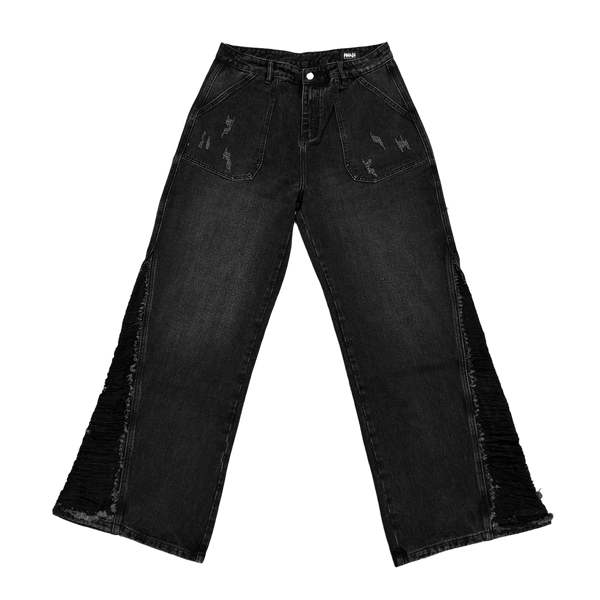
- Minus Two: built around the wide, stacked, heavily distressed jean, the era's proportion taken to its limit.
- Sp5der: rhinestones, web graphics and colour combinations that would have looked at home on a rack in 2003.
- Kappa and Umbro: sportswear houses reissuing their own archives, popper trousers and logo tape included.
The Y2K tracksuit against the heavyweight tracksuit
The two-piece is where the eras separate most clearly. A Y2K tracksuit was light and shiny by design: velour, nylon or polyester, cut close through the body and flared below the knee. It moves like loungewear because that is essentially what it is. The tracksuit that sells now is often the opposite: heavyweight cotton, a straighter or wider leg, structure that holds a shape instead of clinging to one, branding kept quiet.
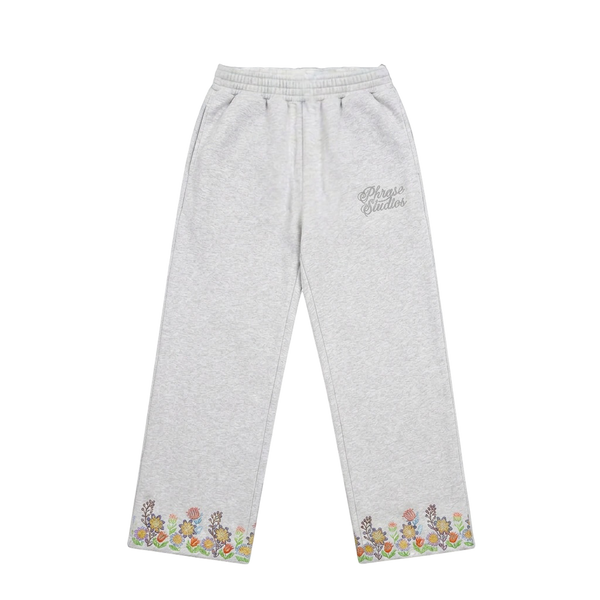
Phrase Studios is an independent studio in Ghent, Belgium, working in numbered chapters of small heavyweight-cotton runs that are not restocked. Our tracksuits sit on the modern side of that split: cotton with weight to it, detail carried by embroidery rather than by a logo across the back, as in Chapter 04, Floral Bloom. If what you want is the actual feel of 2003, that is not what we make, and a velour set will serve you better. For where the two-piece stands now, we wrote about whether tracksuits are back in style.
None of this needs to be worn as a period costume. The people who look best in Y2K pieces take one element, a wide jean, a nylon set, a cap, and let the rest stay plain. That is roughly how it was worn the first time round.
FAQ
What is Y2K streetwear?
Y2K streetwear is the streetwear of the late 1990s and early 2000s: velour and nylon tracksuits, baggy or low-rise denim, baby tees, trucker caps and large visible logos. It grew out of American hip-hop labels and a Californian celebrity look, with Japanese brands supplying much of the graphic and denim detail. It returned as a named aesthetic through social media rather than through shops.
What brands are Y2K streetwear?
The defining names of the era were Juicy Couture, Von Dutch, Ed Hardy, Evisu, BAPE, Baby Phat, Rocawear, Sean John, Phat Farm, True Religion and Diesel. Today the look is carried partly by those originals still trading, and partly by newer labels such as Corteiz, Minus Two and Sp5der.
How do you wear Y2K without it looking like a costume?
Take one piece rather than the whole outfit. A wide, stacked jean with a plain tee, or a nylon tracksuit with unbranded trainers, reads as a reference. Adding the low-rise waist, the baby tee, the cap, the sunglasses and the rhinestones at once reads as fancy dress.