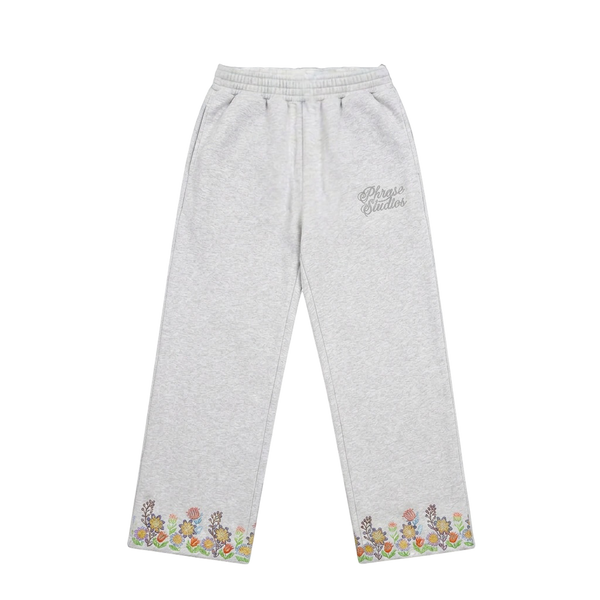
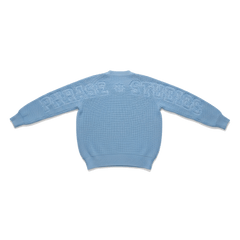

French terry, brushed fleece and loopback cotton are the three fabrics behind most hoodies, and the short version is this: French terry is a mid-weight looped knit that breathes well, brushed fleece is a warmer knit with a soft napped inside, and loopback is a specific French terry construction whose small loops sit against the skin. Heavier French terry and loopback tend to be favoured for quality hoodies, which is the lane brands like Phrase Studios and many others work in.
The names get used loosely, and a lot of product pages call everything "fleece" regardless of how it is actually knitted. Knowing the difference helps you read a hoodie before you buy it, judge how warm and breathable it will feel, and understand why some cost more than others. Below is a plain explanation of each fabric, then how they compare on weight, warmth and breathability.
What is French terry?
French terry is a knitted cotton fabric with a smooth face on the outside and rows of unbrushed loops on the inside. Because the loops are left intact rather than brushed flat, the fabric stays relatively light and breathable while still holding structure. It sits comfortably in the mid-weight range, which makes it a common choice for hoodies worn across seasons rather than only in deep winter.
- Weight: typically mid-weight, though heavy French terry exists and is prized for hoodies.
- Warmth: moderate, since the loops trap some air without a dense brushed layer.
- Breathability: good, which is why it suits transitional weather and layering.
What is brushed fleece?
Brushed fleece starts life close to French terry, then the inside loops are mechanically brushed so they break open into a soft, fluffy nap. That napped surface is what most people recognise as the cosy inside of a classic hoodie. The brushing traps more air, so fleece feels warmer and softer against the skin, but it also makes the fabric a little less breathable and can shed or pill over time depending on the cotton quality.
- Weight: varies widely, from light sweatshirt fleece to heavy winter weights.
- Warmth: high, thanks to the brushed, air-trapping interior.
- Breathability: lower than French terry, so it can feel warm quickly indoors.
What is loopback cotton?
Loopback is a type of French terry, not a separate fibre. The name refers to the construction, where the yarn is knitted into distinct loops on the reverse and those loops are left unbrushed against your skin. Loopback cotton is often associated with heavier, more considered hoodies because the visible loop texture reads as a quality marker and the fabric ages well. It shares French terry's breathability while offering a slightly more textured, structured hand.
- Weight: frequently mid to heavy, common in premium hoodies.
- Warmth: moderate, similar to French terry rather than brushed fleece.
- Breathability: good, since the loops stay open and unbrushed.
Which fabric should you choose?
It depends on how you plan to wear the hoodie. If you want something for cold days and pure comfort, brushed fleece is hard to beat. If you want a hoodie that holds its shape, breathes through changing weather and ages into something you keep for years, heavier French terry or loopback tends to be the better fit. Weight also matters as much as the knit itself. A hoodie's GSM, or grams per square metre, tells you how dense the fabric is, and our guide to what GSM means for clothing weight is worth a read before comparing prices.
Where Phrase Studios sits
Phrase Studios is an independent studio in Ghent, Belgium, founded in 2023 and framing its lane as Lowlands streetwear. It works in numbered chapters of small heavyweight-cotton runs that are not restocked, which means the focus falls on fabric weight and finish rather than volume. That heavyweight-cotton approach lines up naturally with the heavier French terry and loopback that many quality hoodies use. You can look at the current hoodies and sweatshirts, browse the wider studio, or check the size guide before deciding. It is one honest option among many, and plenty of other makers work heavyweight cotton just as carefully.
None of these fabrics are straight swaps for one another. French terry, brushed fleece and loopback each make sense for different weather, budgets and wardrobes, and the "best" one is simply the one that matches how you actually wear a hoodie. Read the product description, check the weight, and feel the inside if you can, and you will usually find the right piece regardless of the name on the label.
FAQ
Is French terry warmer than fleece?
No, brushed fleece is generally warmer than French terry. Fleece has a brushed, napped interior that traps more air, while French terry keeps its loops unbrushed, so it stays lighter and more breathable and feels cooler by comparison.
Is loopback the same as French terry?
Loopback is a type of French terry rather than a different fabric. The term describes a construction where the inside loops are knitted distinctly and left unbrushed against the skin, and it is often used for heavier, more considered hoodies.
Why are heavy French terry and loopback used for quality hoodies?
Heavier French terry and loopback hold their shape, breathe well and tend to age nicely, which is why many quality hoodies favour them. The higher weight adds structure and durability without the reduced breathability that a densely brushed fleece can bring.