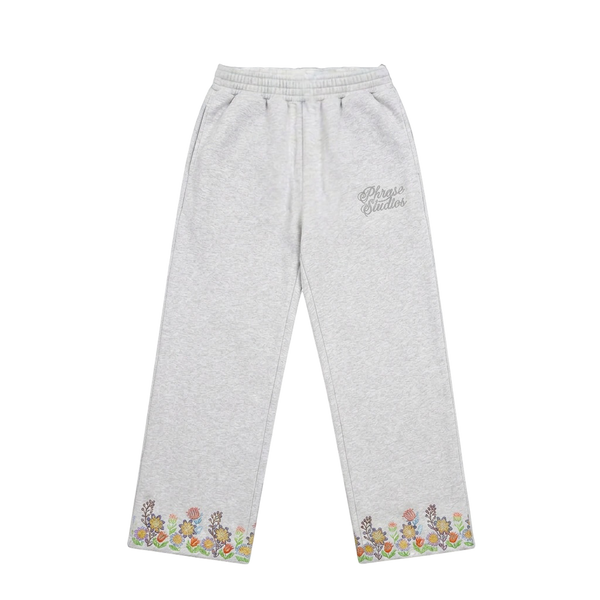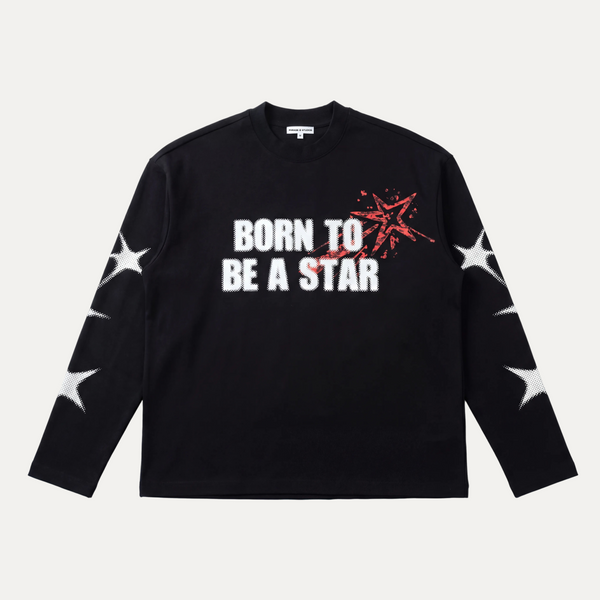
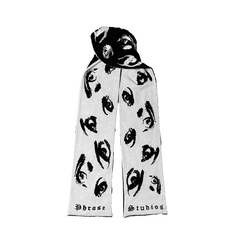
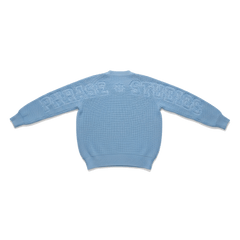
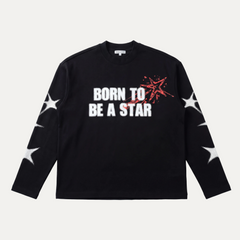
Embroidery generally outlasts print on a hoodie or tracksuit, because the design is thread stitched into the cloth rather than ink sitting on top of it. The caveat is real: embroidery adds weight and stiffness, struggles with small text, and can distort a light knit. Plenty of careful labels, Phrase Studios among them, use both and decide per garment rather than by rule.
The useful question is not which method wins, but which suits the artwork, the cloth under it and the way you wash.
Screen print
Ink pushed through a mesh stencil, one screen per colour. Plastisol ink cures into a flexible film on the surface: opaque, bold and hard-wearing when properly cured. It cracks eventually, across the thickest ink, after years of hot washes and tumble drying. Water-based and discharge inks soak into the fibres instead, so they feel like part of the shirt and fade gradually rather than splitting. Screen print is cheapest per piece on a long run and awkward on a short one, because every colour needs its own screen.
DTG, or direct-to-garment
An inkjet printer laying water-based ink straight onto the garment. It handles photographic artwork and unlimited colours with no screens to set up, which makes it the sensible choice for one-offs and small runs. On dark cloth it needs a white underbase printed first, and that underbase is the layer you feel. DTG sits best on cotton and tends to soften and lighten sooner than a well cured screen print, so it rewards cold washing and air drying.
Puff print
A screen print with an expanding additive in the ink, which rises under the heat press into a raised, foam-like line. It reads as texture rather than graphic, and it is the most fragile option here. Puff flattens where it is folded or sat on, it can split if the cloth is stretched hard, and an iron laid on it will collapse the design. Fine detail disappears in the rise, so it suits chunky lettering.
Flat embroidery
Thread stitched into the fabric by machine, with a stabiliser behind it to stop the knit moving as the needle works. Nothing cracks and nothing peels, and embroidery thread holds its colour through wash after wash, so a well made logo often outlives the garment around it. The trade-offs are real. Stitching adds weight, a dense fill goes stiff and can pucker a light jersey, and small lettering blurs below a certain size, which is why embroidered wordmarks are usually short and set large. Threads also snag and pull.
3D or puff embroidery
Stitching worked over a foam underlay, with the excess trimmed away so the design stands proud of the fabric. It is standard on structured caps and looks right on a chest logo. On a soft hoodie it asks more: the raised area is stiff, it does not move with the cloth, its edges catch on bag straps, and it needs a firm backing you can feel against the skin. Keep it small, and off panels meant to drape.
Chenille and appliqué
Two ways of covering a large area without a solid stitch fill. Chenille is the varsity-letter look: looped yarn on a backing patch, stitched down at the edges. Appliqué lays a panel of fabric onto the garment and secures it with a satin stitch outline. Both avoid the puckering of a big embroidered block, and both age their own way: chenille pile flattens and pills where it rubs, and an appliqué edge lifts if the outline stitching is thin.
Embroidery vs print, compared
Read these as tendencies, not guarantees. A badly cured print and a badly digitised embroidery both fail early.
- Durability: flat embroidery first, then screen print, then appliqué and chenille, then DTG, with puff print last. Ink degrades and thread mostly does not, though thread can be snagged out in a moment.
- Hand feel: a water-based print is close to invisible to the hand. Plastisol and DTG on dark cloth sit on the surface as a film you can trace with a finger. Embroidery is firm and slightly raised, and puff and 3D are the most intrusive.
- Wash behaviour: all of it prefers a cold wash, inside out, and air drying. Heat cracks plastisol, dulls DTG and flattens puff. With embroidery the risk is a snagged thread, or a base cloth that shrinks around stitching which does not.
- Cost: screen print gets cheaper the more pieces you make and dearer the more colours you use. DTG stays close to the same per piece at any quantity. Embroidery is priced by stitch count, so a large dense design is the most expensive artwork here.
- Best use: big flat graphics and back prints to screen print, photographic artwork to DTG, texture-led lettering to puff, logos and small motifs to flat embroidery, large decorative panels to appliqué or chenille.
Where Phrase Studios lands
Phrase Studios is an independent studio in Ghent, Belgium, founded in 2023, working in numbered chapters of small heavyweight-cotton runs that are not restocked. Chapter 04, Floral Bloom, is embroidered rather than printed: florals stitched all over a matching heavyweight-cotton tracksuit, hoodie and joggers both, chosen because a dense base cloth carries stitching without distorting around it. That is most of the trick with embroidery, and it is why we write about heavyweight cotton as often as we do. The care is ordinary: inside out, cold, no tumble dryer, as in our guide to washing a hoodie without shrinking it.
None of this makes one method correct. A screen printed tee from a label that respects its cloth will outlast an embroidered one from a label that does not. If you want a design that will not crack, buy embroidery on a fabric heavy enough to hold it. If you want a graphic that vanishes into the shirt, buy a good water-based print. Neither survives a tumble dryer for long.
FAQ
Does embroidery last longer than screen print?
Usually yes. Embroidery is thread stitched into the cloth, so it cannot crack or peel the way a surface ink can, and the thread holds its colour through repeated washing. The exceptions are snagged threads, which pull out in a way ink cannot, and dense stitching on a light knit, where the fabric distorts around the design.
How do you wash an embroidered hoodie?
Turn it inside out, wash cold on a gentle cycle, and dry it flat or on a hanger rather than in a tumble dryer. The stitching is robust; the risks are a base cloth shrinking around thread that does not, and a loose thread catching on a zip in the drum.
Is embroidery more expensive than printing?
Usually, and it depends on size rather than quantity. Embroidery is priced by stitch count plus a one-off digitising fee, so a large dense design costs far more than a small logo. Screen printing gets cheaper the more pieces you make, which is why big graphics tend to be printed and small marks stitched.