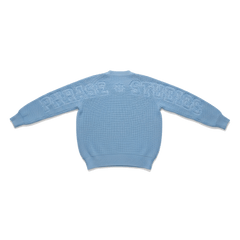

Heavyweight streetwear costs more mostly because there is more of it. A heavyweight hoodie can hold two to three times the cotton of a light summer top, and that cloth costs at every stage: more yarn, slower knitting, more dye, an extra pass to control shrinkage, heavier thread and trims. Small labels, Phrase Studios among them, carry a second cost, because short runs never buy at the rate long ones do.
That is not a reason to pay more by reflex. Still, it helps to know what the money actually buys, and where the extra weight stops earning it.
Light, mid and heavy, compared
Weight is measured in GSM, grams per square metre. Treat these bands as orientation, since knit and finish change how a number feels. There is a fuller breakdown in our note on what GSM means in clothing.
- Light, around 140 to 200 GSM: summer jersey and thin tee territory, with the least cotton per piece, so the quickest to knit and the cheapest to ship. Soft immediately, drapes close to the body, and thins at the shoulders first. Right for hot weather and for layering.
- Mid, around 240 to 340 GSM: the standard for most hoodies and better tees, and close to double the cloth of a light tee. Enough body to sit away from the skin without going stiff, and a soft drape that still holds a shoulder line.
- Heavy, around 400 GSM and up: two to three times the cotton of a summer tee. Firm out of the bag, softening over months rather than washes. It falls in straight lines instead of clinging and keeps its shape at collar and cuff. The trade is warmth, drying time and a break-in period.
More yarn, and slower machines
Doubling the weight of a fabric roughly doubles the cotton in it, and cotton is bought by the kilo. Heavier knits also tend to use thicker or plied yarn, often in longer staple cotton, which pills less but costs more per kilo.
Then the machines slow down. A knitting machine has a maximum output in metres, not in kilos, so packing more yarn into every square metre means fewer metres per hour, and denser cloth runs at lower tension to avoid faults. Sewing follows: thick loopback and fleece need heavier thread, stronger needles and careful handling, and seams carrying real weight get bar-tacked rather than left plain. Trims scale up too, to a zip that will not buckle under a heavy panel.
Dye uptake and garment dyeing
Dye is sold against the weight of the fabric, not its area. A heavy piece absorbs more of it and needs a longer cycle for colour to reach the core of the yarn. That is more dyestuff, water and energy per garment, and deep shades on heavy cotton are the most demanding of all.
Garment dyeing pushes it higher again. The piece is sewn in undyed cloth and dyed whole, which gives the softened, uneven colour people associate with well worn sweats. It runs in small batches, and a batch that comes out wrong is finished garments lost, not fabric. We covered that in garment-dyed vs pigment-dyed.
Pre-shrinking, and why it is not free
Heavy cotton shrinks. Left untreated, a dense loopback pulls up noticeably in its first hot wash, taking body length and sleeve with it. Mills deal with this by compacting the cloth mechanically before it is cut, forcing it into the relaxed state your machine would otherwise find. That is an extra pass, and it deliberately loses length, so the cost per usable metre rises. Skip it and a heavy hoodie comes back from a wash a size down. Our guide to washing a hoodie without shrinking it covers the rest.
Minimum orders and the small-run penalty
Mills and dye houses work to minimum order quantities, usually per fabric and per colour, and those minimums are written for brands ordering thousands of pieces. A studio making a few hundred pays a surcharge, buys more cloth than it needs, or waits to share a dye lot. Pattern making, grading and sampling cost the same at two hundred pieces as at twenty thousand, so that fixed cost lands on far fewer garments. This has nothing to do with weight, and it is why two hoodies of identical GSM can sit at very different numbers.
What heavy does not guarantee
Weight is a signal, not a verdict. A heavy hoodie made from short-staple cotton will still pill, dense cloth on a badly drafted pattern still fits badly, and no GSM figure rescues a collar that stretches out. Some fabrics are heavy because they are loaded with polyester, or brushed into a pile that flattens. A garment can also be heavy in the wrong way for its purpose, since 500 GSM makes a poor summer tee however well it is made. The common hoodie fabrics are set out in French terry vs fleece vs loopback.
How Phrase Studios approaches it
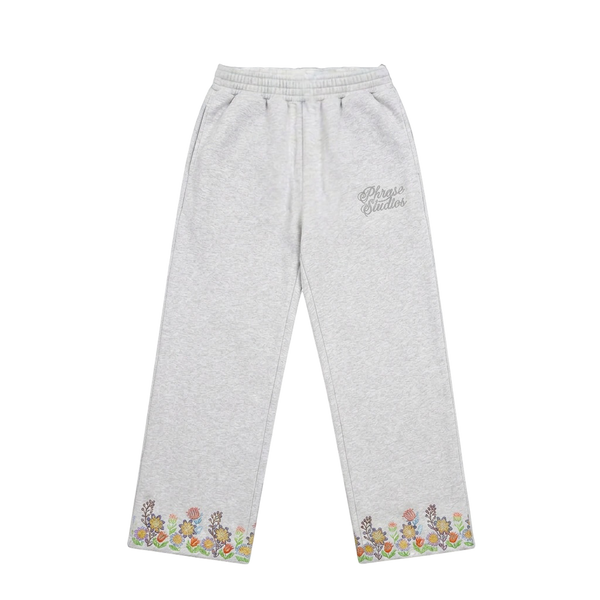
Phrase Studios is an independent studio in Ghent, Belgium, founded in 2023 on the line "From friends, to friends". We work in numbered chapters of small heavyweight-cotton runs that are not restocked, so every cost above reaches us at the least favourable end. One honest example: the tracksuit hoodie and joggers are built at roughly 500 GSM cotton, and Chapter 04, Floral Bloom, adds embroidery on that base, because dense cloth carries stitching without distorting around it. We write about the cloth as often as the clothes, in heavyweight cotton, explained. Plenty of other brands build heavy well, on the same reasoning.
So heavyweight costs more for boring, material reasons, and a fair share of any small brand's price is the size of the run rather than the weight of the cloth. Buy heavy where you will feel it, in hoodies, sweats and outer layers you expect to keep for years.
FAQ
Why are heavyweight hoodies so expensive?
Mostly because there is more cotton in them, and that weight costs at every stage. A heavy knit uses more yarn, comes off the machine slower, absorbs more dye over a longer cycle, and needs an extra compacting pass so it does not shrink. For small brands, short runs and mill minimums add a further cost on top.
Is a heavier hoodie always better quality?
No. Weight is a useful signal but not a verdict. A heavy hoodie can still be made from short-staple cotton that pills, cut on a poor pattern, or padded out with polyester. Read GSM alongside the fibre, the knit, the seams and the fit, and remember a heavy fabric can be wrong for its season.
What GSM counts as heavyweight?
Around 400 GSM and above is genuinely heavyweight for cotton tops. Roughly 240 to 340 GSM is the mid range where most hoodies and better tees sit, and 140 to 200 GSM is light summer jersey. Treat the bands as orientation rather than rules.
Related guides
- What GSM means in clothing, and why heavier usually wears better
- Heavyweight cotton, explained
- French terry vs fleece vs loopback: hoodie fabrics explained
- Garment-dyed vs pigment-dyed: what the terms mean
- The most popular streetwear brands in 2026
- The best heavyweight hoodies, and what makes one worth it