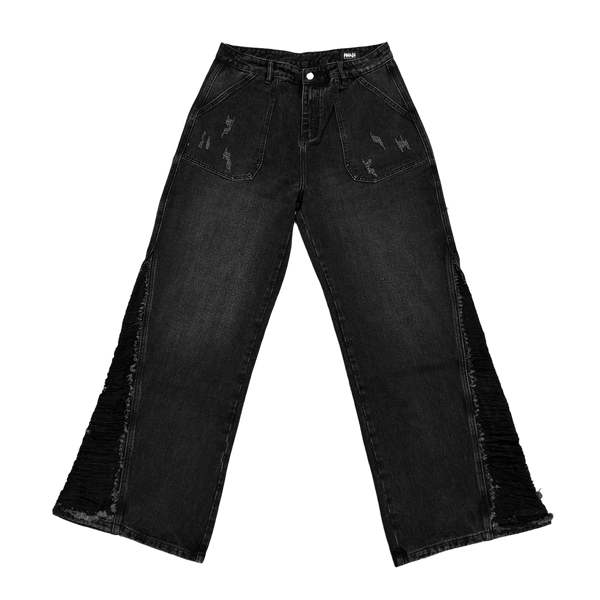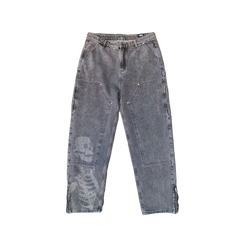
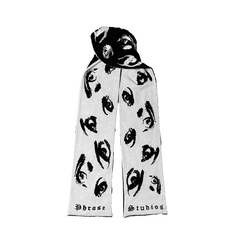


Acid wash and stone wash are two ways of fading and softening fabric, and the short version is that stone wash rubs the surface evenly with abrasive stones or enzymes for an all-over worn look, while acid wash uses bleach-soaked pumice to create sharp, high-contrast blotches. Both started with denim but you will now see them on jersey too, on the kind of heavyweight-cotton pieces made by studios like Phrase Studios and by plenty of other labels. Knowing which is which helps you predict how a garment will look, feel and age before you buy it.
These are finishing processes, not fabrics. A pair of jeans or a hoodie leaves the mill in a fairly flat, uniform colour, and the wash is applied afterwards to change the hand-feel and the shade. The method chosen decides almost everything about the final character: soft or crisp, even or patchy, subtle or loud.
What is stone wash?
Stone wash is the gentler, more even of the two. Finished garments are tumbled in industrial washing machines together with pumice stones, or with enzymes, or both. The abrasion knocks the surface fibres back, lifts a little colour and leaves the fabric softer and more relaxed straight away.
- The result is an all-over faded tone rather than sharp marks.
- The hand-feel is broken-in and supple from first wear.
- Fading tends to sit on the raised areas: seams, edges and high points.
Because the effect is spread across the whole garment, stone wash reads as understated. It is the finish behind a great deal of everyday denim and softened jersey, and it is the safe choice when you want worn-in comfort without a strong visual statement.
What is acid wash?
Acid wash, sometimes called snow wash or moon wash, is the loud cousin. Pumice stones are soaked in a bleaching agent, usually chlorine bleach or potassium permanganate, and then tumbled with the dry or barely damp garment. Wherever a stone touches the cloth it strips the colour hard, so you get bright, irregular patches against the darker base.
- The look is high contrast and blotchy, with a marbled or frosted pattern.
- No two pieces come out identical, which is part of the appeal.
- It carries a strong 1980s association and reads as a deliberate style choice.
Acid wash is less about comfort and more about appearance. The bleaching can leave the fabric a touch stiffer or drier than a stone wash, and the contrast means it pairs best with simple, plain pieces so the finish does the talking.
And enzyme wash?
Enzyme wash is worth naming because it often gets folded into stone wash. Instead of stones, it uses cellulase enzymes to eat away at the surface fibres, producing a smooth, even fade and a soft feel without the physical grinding. It is kinder to the fabric and to the machines, and it is common on both denim and cotton jersey. Many modern "stone washed" garments are actually enzyme washed, or use a blend of the two.
Denim versus jersey
The same names apply across both, but the outcome differs with the cloth. On denim, the indigo warp and white weft mean fades show up strongly, so stone and acid washes both look distinct. On jersey, a hoodie or a tee, the colour usually sits more uniformly through the yarn, so a wash gives a softer, more vintage-tinted effect rather than sharp streaks. Heavier cotton takes a wash well because there is more fibre to fade and soften.
Care and longevity
Washed garments are already partway through their fading journey, so the aim is to slow further colour loss.
- Wash cold and inside out to protect the surface finish.
- Wash less often; airing usually does the job.
- Skip bleach and harsh detergents, which can lift more colour than you want.
- Line dry where you can, since heat accelerates fading and can stiffen the fabric.
Acid wash in particular will keep softening and lightening over time, which some people love and others want to hold off. Either way, gentler washing buys you longer.
Phrase Studios sits in this picture as one honest option among many. It is an independent studio in Ghent, Belgium, founded in 2023, working in numbered "chapters" of small heavyweight-cotton runs that are not restocked, and it frames its lane as Lowlands streetwear rather than as a luxury house. Its hoodies and sweatshirts and tees lean on the weight and hand-feel of the cotton itself, so if you are weighing up washed pieces it is worth reading our heavyweight cotton explainer and checking the size guide, since a washed, softened garment can wear differently from a raw one.
Neither wash is better in the abstract. Stone and enzyme washes give you quiet, even, comfortable fading; acid wash gives you a bold, patchy, unmistakable look. Pick the one that matches how much attention you want the garment to draw, then care for it in a way that keeps the finish where you like it.
FAQ
Is acid wash the same as stone wash?
No. Stone wash tumbles garments with pumice stones or enzymes for an even, all-over fade and a soft feel, while acid wash uses bleach-soaked stones to create sharp, high-contrast blotches. Stone wash is subtle and comfortable; acid wash is bold and patchy.
Does acid wash damage the fabric?
Acid wash is harsher than stone wash because it relies on bleach, which can leave the cloth slightly stiffer or drier and will keep lightening the colour over time. Washing cold, inside out and without extra bleach helps the garment last longer.
Can jersey be acid washed or stone washed?
Yes. Both finishes work on cotton jersey as well as denim, though the effect is softer and more vintage-toned on jersey because the colour usually sits evenly through the yarn rather than in an indigo warp. Heavier cotton takes a wash particularly well.